|
|||||||


| Sponsored Links (Register now to hide all advertisements) |
|
|
 |

|
Thread Tools | Display Modes |
 10-22-2024, 04:14 PM
|
#21 |
|
Senior Member

Join Date: Sep 2014
Location: Mid-Coast Maine
Posts: 3,346
|
 Re: Bleeding brakes-pedal pressure problem. Could use some advice/suggestions
Yes, pics would help.
__________________
Archives of historical but relevant older articles: ------------- Hover mouse over the links below and click! ~~~~~~~~~~~~~~~~~--------------- Rumble Seat’s Notes Techno Source for the 1932 thru 1953 Flathead Ford |

|

|
|
10-22-2024, 04:35 PM
|
#22 |
|
Senior Member
Join Date: Feb 2023
Posts: 231
|
Re: Bleeding brakes-pedal pressure problem. Could use some advice/suggestions
Update; Adjusted the rear barkes by the top adjusters. (no way to do the 25-35 pound of force) Hard to tell the brake drag from the differental drag.
Alsp reduced the free pedal play down to around a 1/4" Got son-in-law to pump the pedal harder. Used for force that grandson. Got some more air (not very much just a couple of small bubbles) out. Ran a 1/2 quart of fluid through. Also have a 1/4 pedal now! Even after sitting a while. That is a IMPROVEMENT. But. There is more pressure on each brake now with the pedal applied. It now takes a crowbar (and excessive grunt work. More than what was required to turn Saturdays bleeding, hubs) between the lugs to turn each hub. That won't stop the car! I has to be the MC, not suppling enough pressure to all 4 brakes. If I switch MC's. Just in case this MC I have now was bad (wrong) from the beginning. What specific MC would you guys suggest? Also. What would happen if I do NOT use the 25-35 pounds of pressure procedure on the pedal to adjust the rear brakes? Thanks for the help. |
|
|
|
| Sponsored Links (Register now to hide all advertisements) |
|
|
|
10-22-2024, 05:41 PM
|
#23 | |
|
Senior Member
Join Date: Feb 2023
Posts: 231
|
Re: Bleeding brakes-pedal pressure problem. Could use some advice/suggestions
Quote:
|
|
|
|
|

|
10-22-2024, 06:21 PM
|
#24 |
|
Senior Member
Join Date: Sep 2021
Location: summerton, sc
Posts: 543
|
Re: Bleeding brakes-pedal pressure problem. Could use some advice/suggestions
Not sure on your conversion but some were supplied with a 1" spacer i think. maybe some of your stroke problem
|
|
|
|
|
10-22-2024, 10:37 PM
|
#25 |
|
Senior Member

Join Date: May 2010
Location: Minnesota
Posts: 2,156
|
Re: Bleeding brakes-pedal pressure problem. Could use some advice/suggestions
Looking at your pictures raised a question; how did you convert the deuce pedal to push on the master cylinder and what pedal ratio did you end up with?
I have noticed when an ear is welded to a '32 pedal long enough to line up with a master cylinder mounted under the K member, some pedal ratio is lost. My kid usually retains the 1-1/16" Ford master as a 1" dual has a low pedal. |
|
|
|
|
10-22-2024, 10:57 PM
|
#26 |
|
Senior Member
Join Date: Jan 2011
Location: Beverly Kansas
Posts: 5,557
|
Re: Bleeding brakes-pedal pressure problem. Could use some advice/suggestions
Sponsored Links (Register now to hide all advertisements)
with the boot off you can feel the rod to see if it has any play, and thats all you want or you have cheated yourself out of some stroke. |
|
|
|
|
10-22-2024, 11:58 PM
|
#27 | |
|
Senior Member
Join Date: Feb 2023
Posts: 231
|
Re: Bleeding brakes-pedal pressure problem. Could use some advice/suggestions
Quote:
You want a better picture of the lower pedal? I don't see where anything has been welded to the pedals. (confused by your statement) So, are you suggesting that I get 1 1/16" ID, drum/drum, non power MC? Thanks |
|
|
|
|
|
10-23-2024, 12:03 AM
|
#28 | |
|
Senior Member
Join Date: Feb 2023
Posts: 231
|
Re: Bleeding brakes-pedal pressure problem. Could use some advice/suggestions
Quote:
The '39 to '48 Ford brake service manual states to have 1/2"-3/4" of free pdeal travel. I was using that as a guide. I started out with just a whisker under a 1/2" of free travel. Then today reduced it to a 1/4". I can bring it down to a 1/16", or just a little free travel feel. |
|
|
|
|
|
10-23-2024, 04:32 AM
|
#29 |
|
Senior Member
Join Date: Aug 2020
Posts: 323
|
Re: Bleeding brakes-pedal pressure problem. Could use some advice/suggestions
The 1/16" has nothing to do with the pedal. He is asking you if the MC piston comes all the way back.
Pull the rubber boot back and make sure, when the pedal is up, that the piston has returned to the rest position, and has a little clearance. (This is the 1/16" that the other poster is referring to). The MC piston has to come right out to it's stop to allow the fluid in the reservoir to enter the pressure side of the system. Someone also asked you if you have the residual pressure valves fitted. I haven't read your reply to that. There are two different residual pressure valves, one for disc brakes and one for drum brakes. The residual pressure valves are usually found by removing the brake line fittings at the MC. You can get after market ones that fit in the brake lines. I think they are important, especially if your MC is close, or lower in height, than the wheel cylinders. |

|
|
|
10-23-2024, 07:40 AM
|
#30 | |
|
Senior Member
Join Date: May 2010
Location: Granger (Northern) Indiana
Posts: 1,611
|
Re: Bleeding brakes-pedal pressure problem. Could use some advice/suggestions
Quote:
It really isn't a good idea to pinch shut brake hoses, as unseen damage can occur. The proper way is to plug the line or port with steel/brass fittings. |
|
|
|
|
|
10-23-2024, 08:18 AM
|
#31 | |
|
Senior Member
Join Date: May 2010
Location: Granger (Northern) Indiana
Posts: 1,611
|
Re: Bleeding brakes-pedal pressure problem. Could use some advice/suggestions
Quote:
Your pictures don't show the master cylinder push rod connection to the pedal, but pre-'39 pedals "pulled" cables from the top of the lower pedal, while later hydraulic pedals "pushed" the master cylinder from the bottom. A tab may have been added to the bottom of your early pedal, or a linkage is used to convert "pull" to "push". The pictures don't show this clearly. The hose running from the secondary master cylinder port should be anchored or supported at the junction to the line, not left floating. I can't see the primary line, but the same would hold true for it. Actual push rod clearance to the primary master cylinder piston can be very small (.020"-.030") as long as your pedal fully returns with it's own return spring. This will minimize actual pedal "free" movement. It's very important to be sure the pedal can fully stroke the master cylinder before the pedal bottoms out. |
|
|
|
|
|
10-23-2024, 09:24 AM
|
#32 |
|
Senior Member
Join Date: Sep 2014
Location: Mid-Coast Maine
Posts: 3,346
|
Re: Bleeding brakes-pedal pressure problem. Could use some advice/suggestions
After a lot of searching, this is the closest I could find that looks like your MC. https://www.performanceonline.com/19...R-DRUM-BRAKES/
From the searching, it is likely that you don't have residual check valves in your MC. When you rebuilt the MC from your bag of parts, did you have two of these, one for each port? If you don't remember, push a paper clip it each port. If you feel resistance right away, you have a check valve in that port. check both front and rear.  Glenn
__________________
Archives of historical but relevant older articles: ------------- Hover mouse over the links below and click! ~~~~~~~~~~~~~~~~~--------------- Rumble Seat’s Notes Techno Source for the 1932 thru 1953 Flathead Ford Last edited by glennpm; 10-23-2024 at 09:51 AM. |
|
|
|
|
10-23-2024, 09:37 AM
|
#33 |
|
Senior Member
Join Date: Sep 2014
Location: Mid-Coast Maine
Posts: 3,346
|
Re: Bleeding brakes-pedal pressure problem. Could use some advice/suggestions
Regarding an alternate MC, I did a bunch of searching for stepped bore designs, being familiar with MICO products, and ended up with this. It works great. I also have 10psi check valves in both the front and rear brake lines.
https://www.fordbarn.com/forum/showp...98&postcount=5 The whole thread is here, https://www.fordbarn.com/forum/showt...nder&showall=1 Glenn
__________________
Archives of historical but relevant older articles: ------------- Hover mouse over the links below and click! ~~~~~~~~~~~~~~~~~--------------- Rumble Seat’s Notes Techno Source for the 1932 thru 1953 Flathead Ford |
|
|
|
|
10-23-2024, 10:10 AM
|
#34 | |
|
Senior Member
Join Date: May 2010
Location: Granger (Northern) Indiana
Posts: 1,611
|
Re: Bleeding brakes-pedal pressure problem. Could use some advice/suggestions
Quote:
Your pictured residual check valve is only found in single circuit masters, internally at the bore's end. Dual master residual valves are much smaller and located as you stated behind the tube seats. |
|
|
|
|
|
10-23-2024, 10:17 AM
|
#35 |
|
Senior Member
Join Date: Sep 2014
Location: Mid-Coast Maine
Posts: 3,346
|
Re: Bleeding brakes-pedal pressure problem. Could use some advice/suggestions
Good, thanks
|
|
|
|
|
10-23-2024, 12:08 PM
|
#36 |
|
Senior Member
Join Date: May 2010
Location: Minnesota
Posts: 2,156
|
Re: Bleeding brakes-pedal pressure problem. Could use some advice/suggestions
If you didn't pull the brass seats and remove the residual valves from the master when you had it powder coated; is it possible the heat when it was baked damaged the rubber plungers or the springs?
|
|
|
|
|
10-23-2024, 12:28 PM
|
#37 |
|
Senior Member
Join Date: Feb 2023
Posts: 231
|
Re: Bleeding brakes-pedal pressure problem. Could use some advice/suggestions
[QUOTE=69a;2345417]The 1/16" has nothing to do with the pedal. He is asking you if the MC piston comes all the way back.
Pull the rubber boot back and make sure, when the pedal is up, that the piston has returned to the rest position, and has a little clearance. (This is the 1/16" that the other poster is referring to). The MC piston has to come right out to it's stop to allow the fluid in the reservoir to enter the pressure side of the system. Someone also asked you if you have the residual pressure valves fitted. I haven't read your reply to that. There are two different residual pressure valves, one for disc brakes and one for drum brakes. The residual pressure valves are usually found by removing the brake line fittings at the MC. You can get after market ones that fit in the brake lines. I think they are important, especi Sorry, I see now that two different subjects are being emphisized. The "free pedal travel" requirment is stressed in the manual by BOLD print in a couple of places. Since that "free pedal measurment" is emphasized, that is what I thought you guys are/were refering to. Ok. YES, the MC piston returns to the snap ring by it's own spring resistance every time it is compressed either by hand or the pedal, with the boot off. I will get grandson to take better pictures of the bottom of the brake pedal assembly this evening. Those pictures I had him take were of just the MC as requested. The "residual valve" request, again, I quessed I flunked that too. What does it look like? You say they're located inside the MC at the fitting port. The only thing inside those ports is the reversed flair the double flaired line seats into by the flair nut. That MC is supposed to be a manual drum/drum unit. The outfit that suggested that I use that pictulair MC, told me, that is all I'll need. (no external valves) Funny. I can rmember that statment from years ago, but I can't remember what the MC part # is. So. I guess that you are going to have to' show'/school me on these residual valves, along with the pedal ratio deal. As I have stated, I have no idea what it looks like, where to find it, and what to do with it. thanks |
|
|
|
|
10-23-2024, 12:45 PM
|
#38 |
|
Senior Member
Join Date: Sep 2014
Location: Mid-Coast Maine
Posts: 3,346
|
Re: Bleeding brakes-pedal pressure problem. Could use some advice/suggestions
Push a paper clip it each port. If you feel resistance right away, you have a check valve in that port. check both front and rear. If there is no resistance, you need to buy external residual pressure valves.
https://www.ebay.com/itm/294911150189 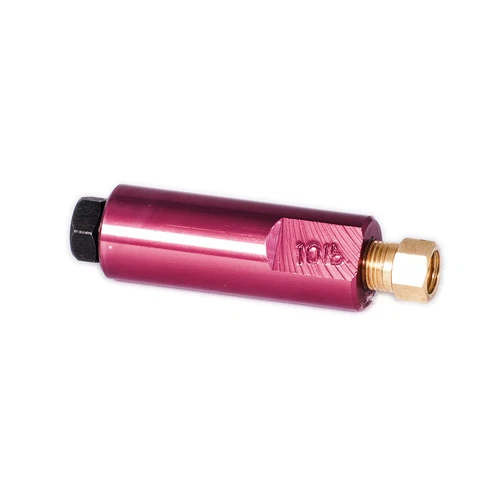
|
|
|
|
|
10-23-2024, 12:45 PM
|
#39 | |
|
Senior Member
Join Date: Feb 2023
Posts: 231
|
Re: Bleeding brakes-pedal pressure problem. Could use some advice/suggestions
Quote:
Powder coating is a little more resistant to brake fluid lifting than what paint is. The inside fitting port looks exactly like Glenn's picture! Last edited by acchaplin; 10-23-2024 at 12:55 PM. |
|
|
|
|
|
10-23-2024, 12:59 PM
|
#40 | |
|
Senior Member
Join Date: Feb 2023
Posts: 231
|
Re: Bleeding brakes-pedal pressure problem. Could use some advice/suggestions
Quote:
|
|
|
|
|
|
«
Previous Thread
|
Next Thread
»
| Thread Tools | |
| Display Modes | |


 Linear Mode

|
|

| Sponsored Links (Register now to hide all advertisements) |
|
|
All times are GMT -5. The time now is 03:34 AM.